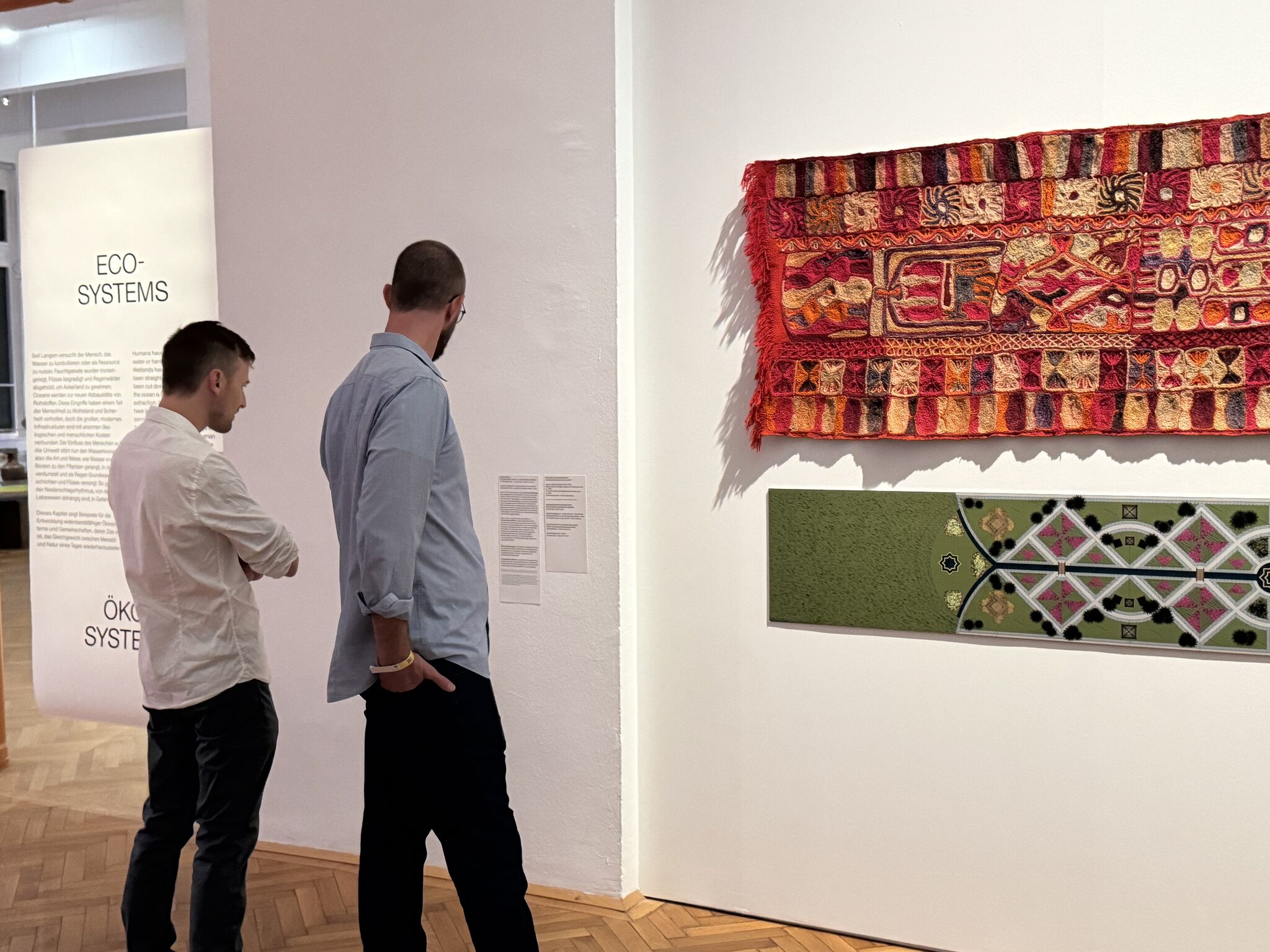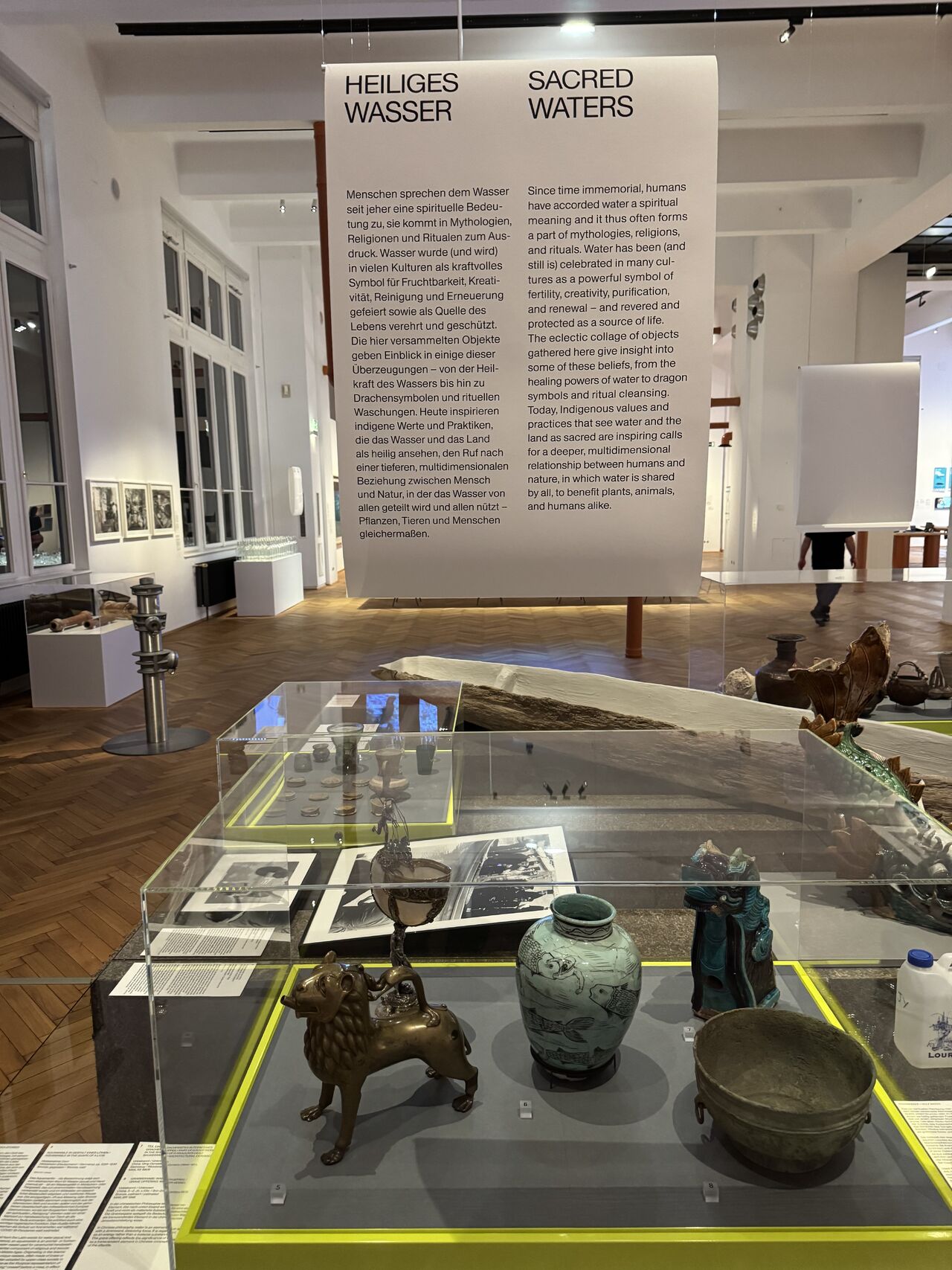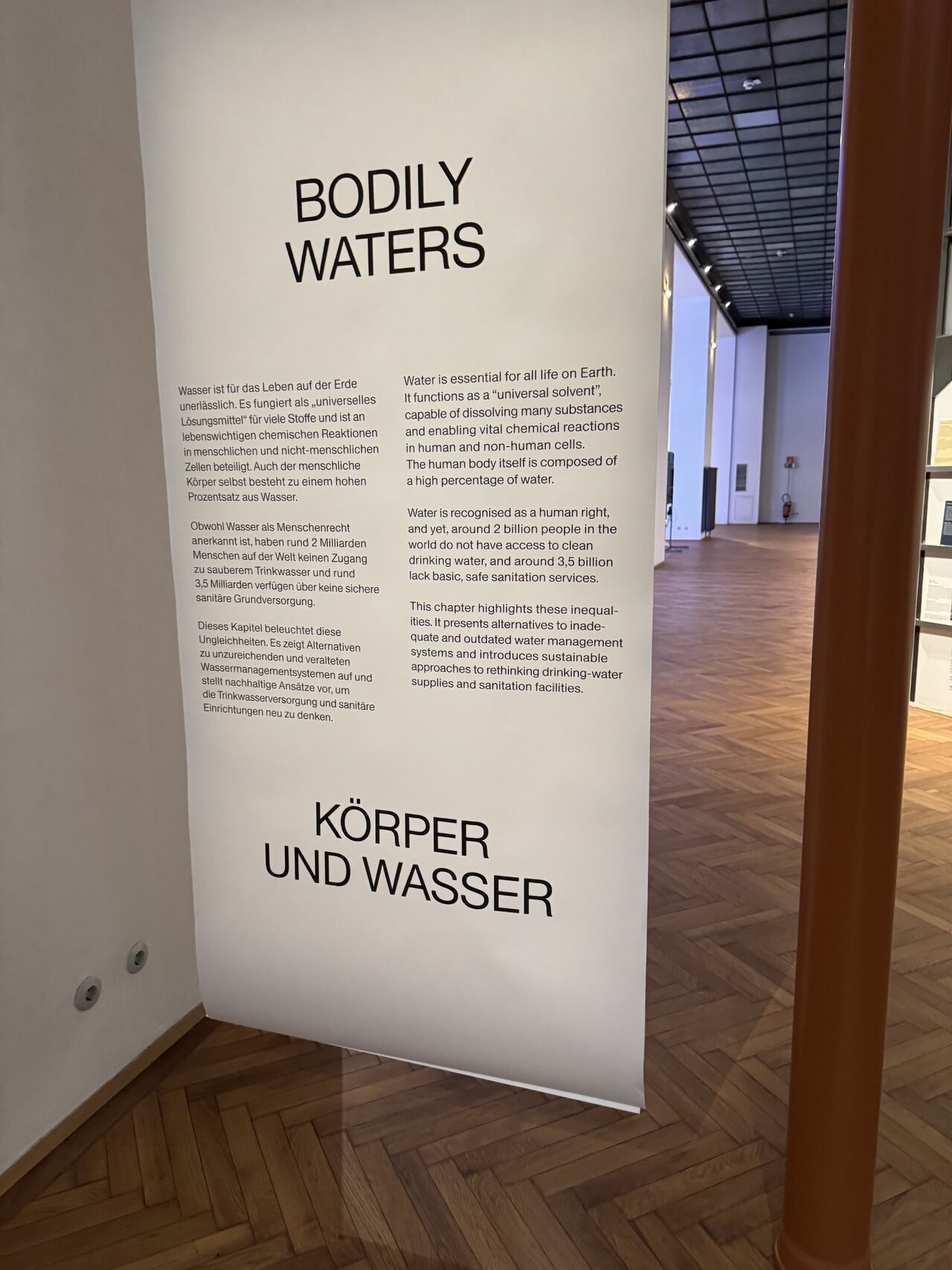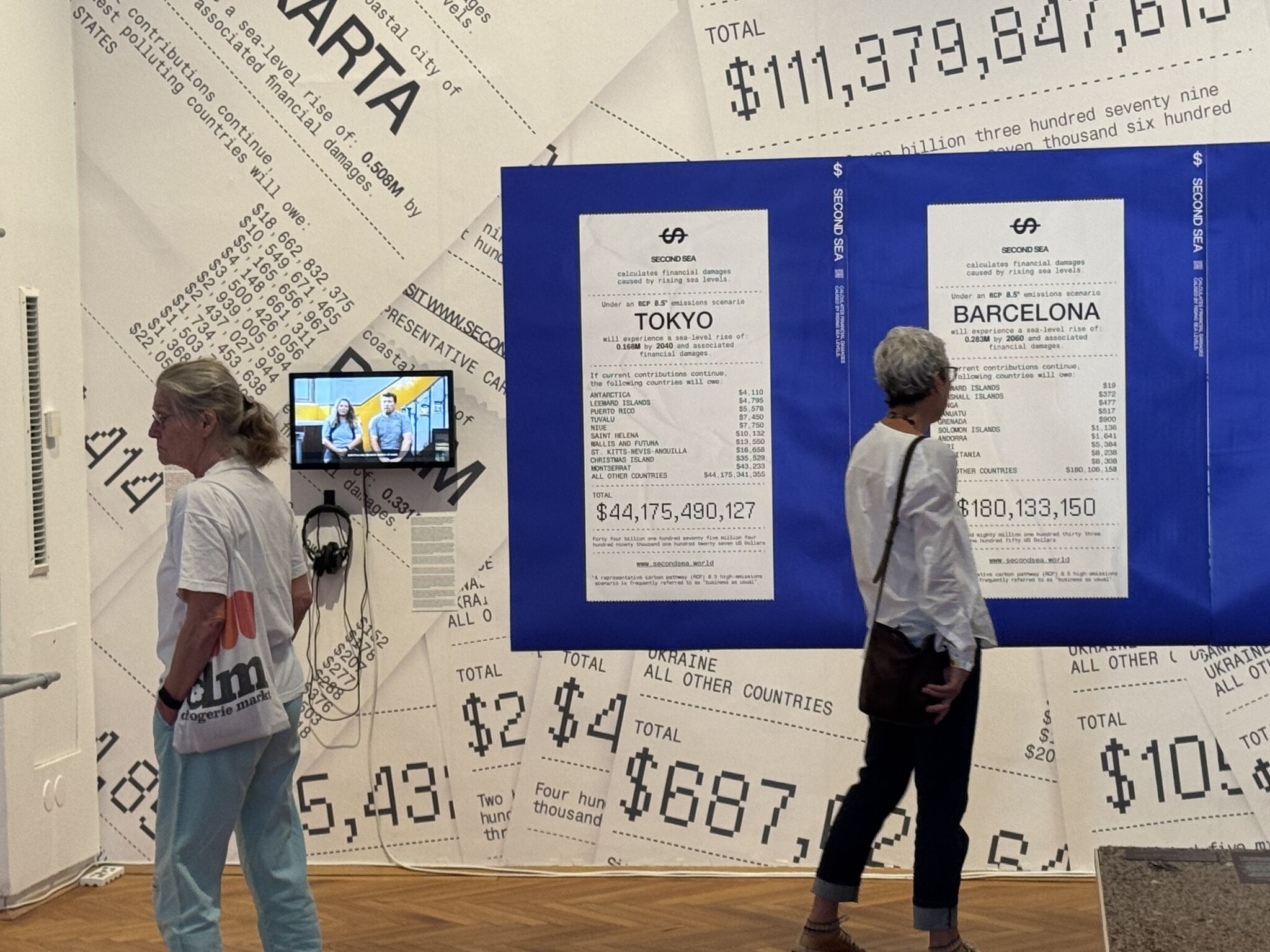
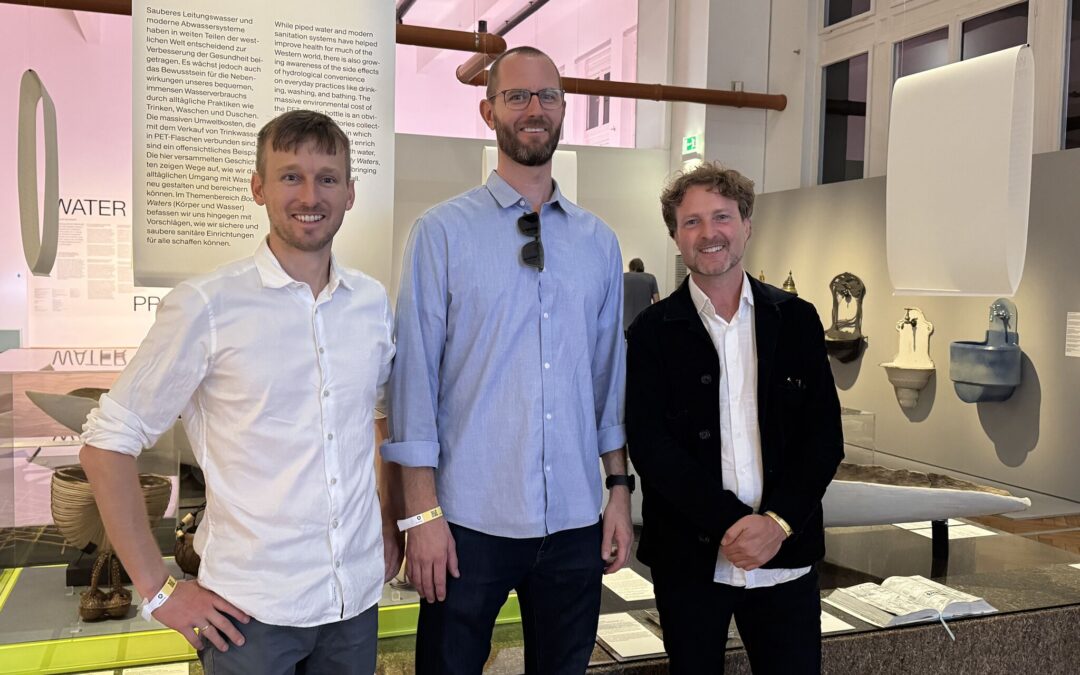
Today I visited the Water Pressure: Designing for the Future exhibit at MAK Museum in Vienna by Jane Withers Studio.
This was part 3 of the trilogy pilgrimage that began with Thirst: In Search of Freshwater at Wellcome Collection in London, followed by charity: water immersive Experience Lab, at Franklin Factory in Nashville and rounded out today with Water Pressure. I had two great water companions for this visit, Sebastien Tilmans and John Moyer.
Each of the three, had something very unique to offer and were all very different from one another.
Water Pressure: Designing for the Future was the most comprehensive of all three. Jane Withers deep knowledge of and understanding of this subject and that of her colleagues, Ria Hawthorn, was evident in this body of work. It was beautiful, engaging, captivating and so well informed. I was honored to be part of the Advisory Board, alongside Henk Ovink and many others, but the credit truly goes to Jane for this extraordinary feat. It encapsulated so much so well. I particularly enjoyed watching how members of the public, with no specialist connection to the subject, interacted with it and were drawn in and made it their own. This is the power of this medium. Its very personal and accessible.
The exhibit featured the work of many artists, woven together into a very cogent exhibit. This is the creative gift of the curator, who can weave a tapestry from diverse source of inputs, including works from Julia Watson, (whose new book. LoTEK Water, is just launching), Meridel Rubenstein, City of 1000 Tanks among others.
The exhibition had 5 Chapters which hung together really well and will soon be memorialised in a book.
1. Water Stories
Provided a narration on the cultural significance of water from different eras and cultures and aims to reawaken a connection to water and an understanding of its place in the ecosystem.
2. Bodily Waters
Explores water’s intimate connection to human and non-human bodies. The focus here is on the global inequalities in access to safe drinking water, and on alternative scenarios for sanitation and wastewater management.
3. Thirsty Cities
Shows innovative solutions for the water crisis in international metropolises such as Chennai, London, Mexico City, Copenhagen, and Lagos, addressing water scarcity, pollution, and flooding—from wastewater treatment with the help of plants to swimming architecture.
4. Invisible Water
Highlights the water footprint of agriculture and industry, outlining new ways to reduce water consumption and pollution.
5. Ecosystems
Ecosystems presents alternative scenarios for restoring the balance between humans and nature, emphasizing the role of rivers and oceans in preserving biodiversity. Here, local and indigenous knowledge is activated for the vision of a creative and more resilient water culture.
I left very inspired and would happily return and spend more time there. Brave Blue World Foundation proud to partner on this communication initiative.