
The BlueTech analyst alerts this week had a number of items that jumped out to me.
1. The Dutch Government has plans to drive down domestic water use to 100L per person per day, by embracing grey water reuse and rainwater harvesting through its National Plan of Action to Save Drinking Water (NPvA).
2. Marubeni Corporation invest into Aquagreen sludge pyrolysis and Biochar technology.
And then this one…which had a surprising twist.
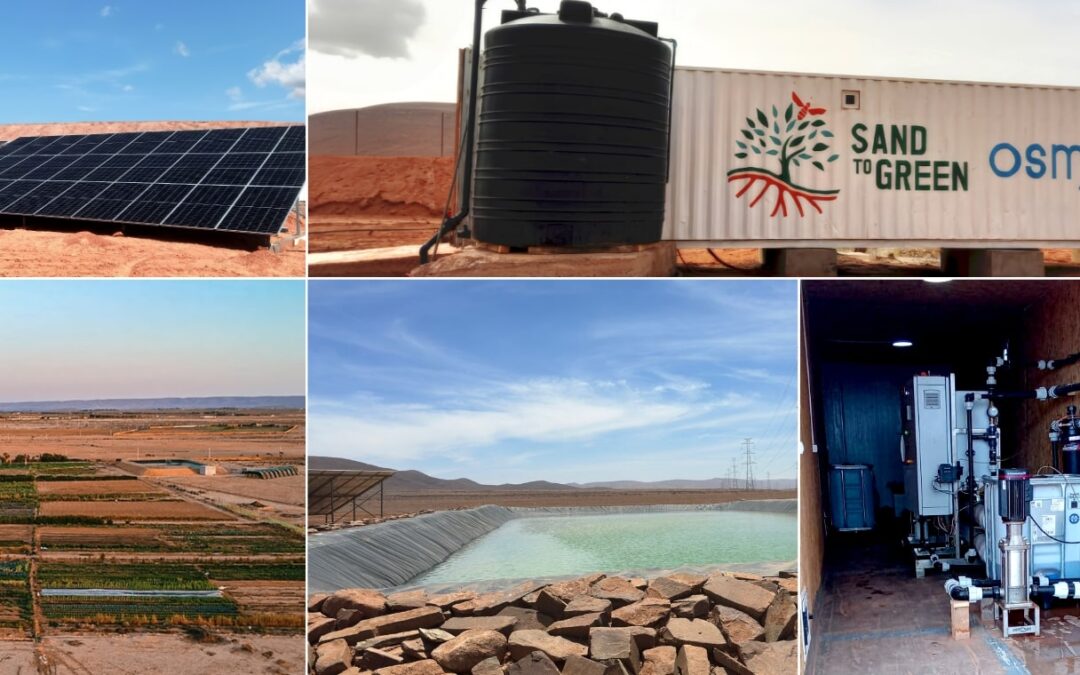
3. OSMOSUN® – Water Solutions has commissioned its first solar desalination plant in Morocco, producing up to 140 million m³ of freshwater daily for irrigation of 31ha, part of a joint venture with PCS to address Morocco’s water crisis.
My first reaction was, that’s a big number.
(More often, announcements use units like “litres per year”, to make a number sound big. Eg. The use of atmospheric water capture to produce whiskey at a distillery in Rajastan: “27,000 litres per month”, or contextualised … 1m3 a day)
Critical analysis and some quick number crunching of the OSMOSUN water volumes, indicates this would lead to use of 45m3 per m2 of land per day. And would need about 20,000 MW of installed solar capacity. Something seemed clearly off with those numbers.
A double click, by one of the of the research team found what appears to be a translation error from Osmosun’s website in french versus English , where a ‘million’ got added:
https://www.osmosun.com/mise-en-service-de-la-premiere-unite-de-dessalement-osmosun-au-maroc/
www.osmosun.com/en/first-osmosun-desalination-plant-commissioned-in-morocco
The original source in french references 140m3 per day. Which is about 0.5 litres per m2 per day and would need something more like 20kW of solar power, much more plausible numbers. Never underestimate the power of simple math to ground truth numbers.
All well that ends well and this is resolved to an interesting story that illustrates the use of solar powered desalination on a brackish groundwater source to produce water for irrigation in agriculture.