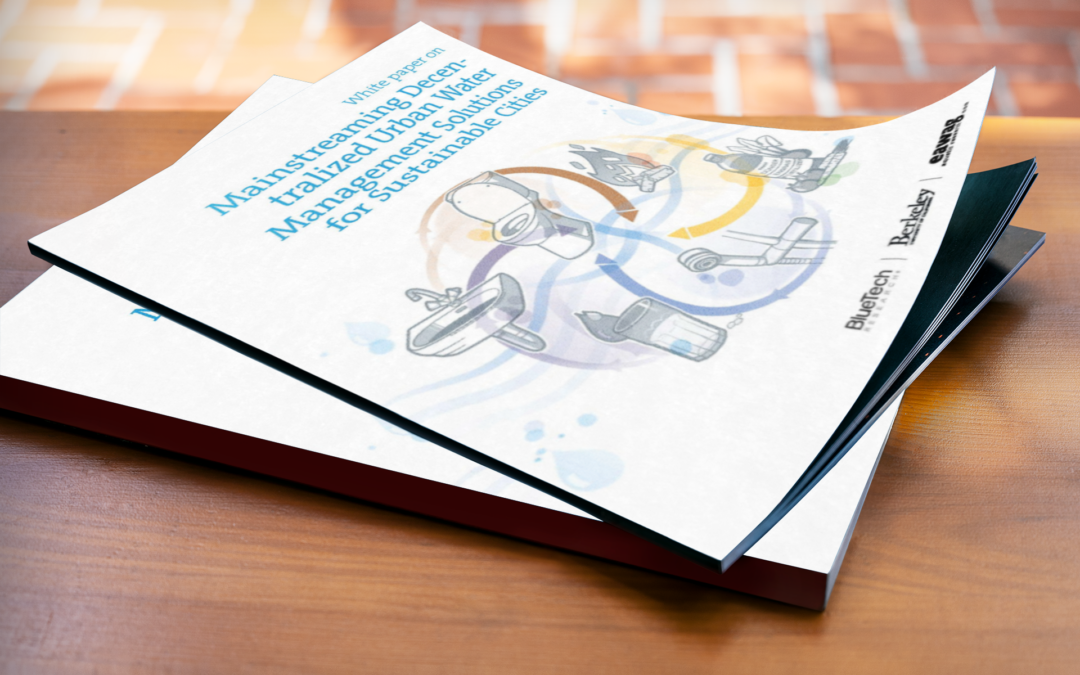
As climate change and rapid urbanization continue to challenge our cities, innovative solutions are essential to ensure sustainable urban development. A recent white paper titled “Mainstreaming Decentralized Urban Water Management Solutions for Sustainable Cities” provides a comprehensive look into how decentralized urban water management (UWM) solutions can address these issues. This initiative, led by experts from BlueTech Research, EAWAG, and UC Berkeley, outlines groundbreaking case studies and a strategic roadmap for integrating these solutions globally.
The white paper highlights the urgent need for cities to rethink their urban water infrastructure due to the pressures of climate change and urbanization. Decentralized UWM solutions, which manage water resources close to the source, offer promising avenues to address water scarcity, sanitation, and environmental pollution.
Despite numerous innovative projects worldwide, a lack of coordination and knowledge sharing among stakeholders has slowed the global diffusion of these solutions. Drawing lessons from the mainstreaming of other transformative infrastructure solutions, such as renewable energy and electric mobility, the paper suggests that a more interconnected innovation ecosystem is crucial for accelerating the adoption of decentralized UWM solutions.
To foster this ecosystem, an international workshop organized by EAWAG, UC Berkeley, and BlueTech Research in Zurich brought together leading firms, cities, regulators, researchers, funders, and NGOs. This workshop focused on creating a roadmap to scale decentralized UWM solutions over the next 10-30 years. The discussions centered around three primary types of solutions: building-scale non-potable water systems, district-scale resource recovery systems, and decentralized nutrient management systems.
The white paper is available on BlueTechResearch.com.
Innovative Case Studies
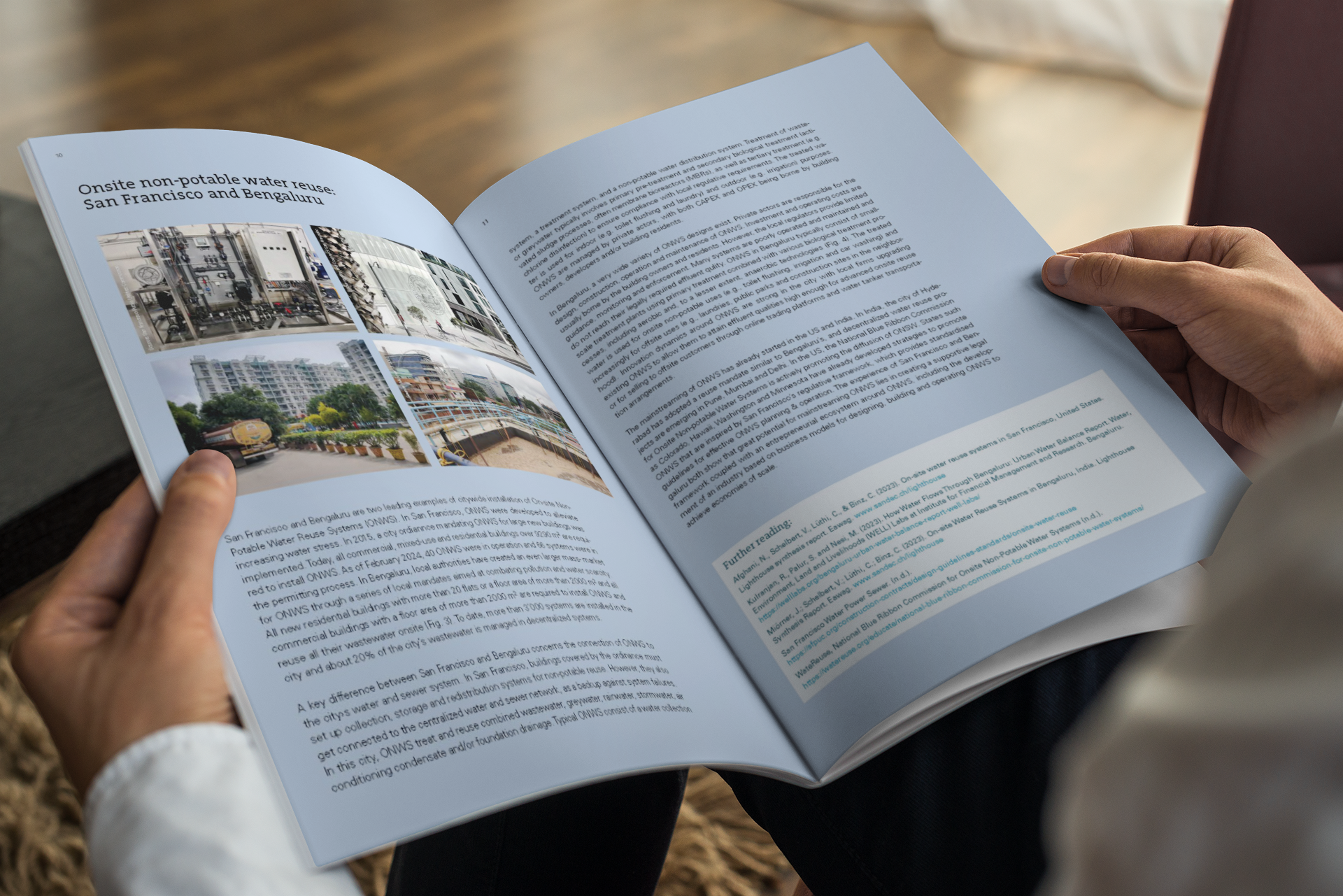
1. Onsite Non-Potable Water Reuse: San Francisco and Bengaluru
San Francisco: Faced with increasing water stress, San Francisco implemented a city ordinance in 2015 requiring onsite non-potable water reuse systems (ONWS) in large new buildings. Today, over 40 ONWS are operational, treating combined wastewater, greywater, rainwater, and more for non-potable uses such as toilet flushing and irrigation.
Bengaluru: To combat pollution and water scarcity, Bengaluru mandates ONWS for new residential and commercial buildings. Over 3,000 systems are installed, managing approximately 20% of the city’s wastewater. These systems treat greywater and wastewater for reuse in various applications, contributing significantly to local water conservation efforts.
2. District-Scale Resource Recovery Systems: Hamburg and Helsingborg
Hamburg: The Jenfelder Au project in Hamburg is a model for sustainable urban development, serving around 1,500 residents with the Hamburg Water Cycle (HWC) system. This system separates and treats rainwater, greywater, and blackwater, producing biogas and soil amendments while reusing treated greywater and retaining rainwater for environmental benefits.
Helsingborg: The H+ area in Helsingborg features the “Tre-Rör-Ut” system, which collects and treats blackwater, greywater, and organic food waste. This system produces biogas for city buses, fertilizers for agriculture, and treated greywater for various uses, showcasing a successful integration of resource recovery at a district level.
3. Decentralized Nutrient Management: Geneva and Paris
Geneva: The Coopérative Équilibre has implemented compost toilet systems in three housing projects, serving 145 people. These systems divert and treat urine and feces, producing fertilizers used in the cooperative’s gardens, demonstrating a low-tech, community-driven approach to nutrient management.
Paris: In the Saint-Vincent-de-Paul neighborhood, Paris is implementing an ambitious urine source separation project to create an eco-neighborhood for 4,000 people. The collected urine is treated to produce fertilizer for local use, addressing urban growth while reducing river pollution.
Roadmap to Mainstreaming Decentralized UWM Solutions
The workshop in Zurich identified key drivers and challenges for mainstreaming these solutions, focusing on technology development, regulative frameworks, industry and market structures, and legitimacy. Key interventions proposed include:
- Developing streamlined, context-sensitive standards and regulatory frameworks: This would facilitate smoother implementation and broader adoption of decentralized UWM solutions.
- Increasing technology standardization and mass manufacturing: This can reduce costs and improve the reliability and efficiency of these systems.
- Enhancing public trust and legitimacy: By showcasing successful projects and creating supportive policies, stakeholders can build confidence in decentralized solutions.
The white paper by BlueTech Research, EAWAG, and UC Berkeley underscores the transformative potential of decentralized UWM solutions. Through innovative case studies and a strategic roadmap, it highlights the need for coordinated efforts to mainstream these solutions, creating resilient, sustainable cities equipped to tackle the challenges of the future. By fostering collaboration and knowledge sharing among global stakeholders, we can accelerate the adoption of decentralized water management practices, ensuring a sustainable urban future for generations to come.
Download the white paper on BlueTechResearch.com.